Where the light goes when a pavilion is cut shallow
A diamond makes no light of its own. Everything you are paying for is a journey in and back out again, and there is one angle at which that journey fails.
Every stone we set is cut to give the room back to you. The diamond on this page is not a photograph and not a video: it is fifty-seven facets and a culet, traced ray by ray, refracting exactly as the material would at an index of 2.42.
A one carat round brilliant, drawn by tracing light through fifty-seven real facets. Your browser is showing the still.
A diamond has no colour and makes no light of its own. Everything you pay for is a journey: light goes in through the table, bounces off the back by total internal reflection, and comes out of the top at your eye. Get the pavilion angle wrong by three degrees and the light leaks out of the bottom instead. Move the slider and watch it happen.
Ideal proportions
Your proportions
Every jewellery site on the internet shows you a ring the size of your hand. We would rather you were not surprised. Hold any bank card against the rectangle below and drag until they match — every piece on this site will then be drawn at the size it will arrive.
A metal's colour is not a decision. It falls out of its complex refractive index — a real part and an absorption part, measured in a laboratory in 1972 and never since revised. Gold hands back ninety-five per cent of red light and barely a third of blue. The swatches below are rendered from those measurements, and the curve beside each one is the arithmetic that produced it.
The house opened off the rue de la Paix in the winter of 1911, founded by a setter rather than a designer — which is why it has always started from the stone. We buy rough where the market allows and cut it ourselves. Fewer than ninety pieces leave the atelier in a year, and every one carries the mark of the setter who finished it.

A commission takes from fourteen weeks and most of them are spent not making anything. The stone is chosen first, the design is drawn at life size and checked against it with a gauge, and the setting is cut to the stone in front of us rather than to the figure on its certificate. The last tenth of a millimetre is the difference between a setting that grips and a setting that merely shows.
We select and, where the rough allows, cut the stone before a single line of the setting is drawn. A design made around a stone that does not exist yet is a drawing, not a commission.
Every design is rendered at one to one on paper and checked against the stone with a gauge. Nothing is presented enlarged — including on this website.
The shank and the setting are carved as a single body and cast together. A soldered joint is a place for a ring to fail in thirty years, and we intend these to outlast us.
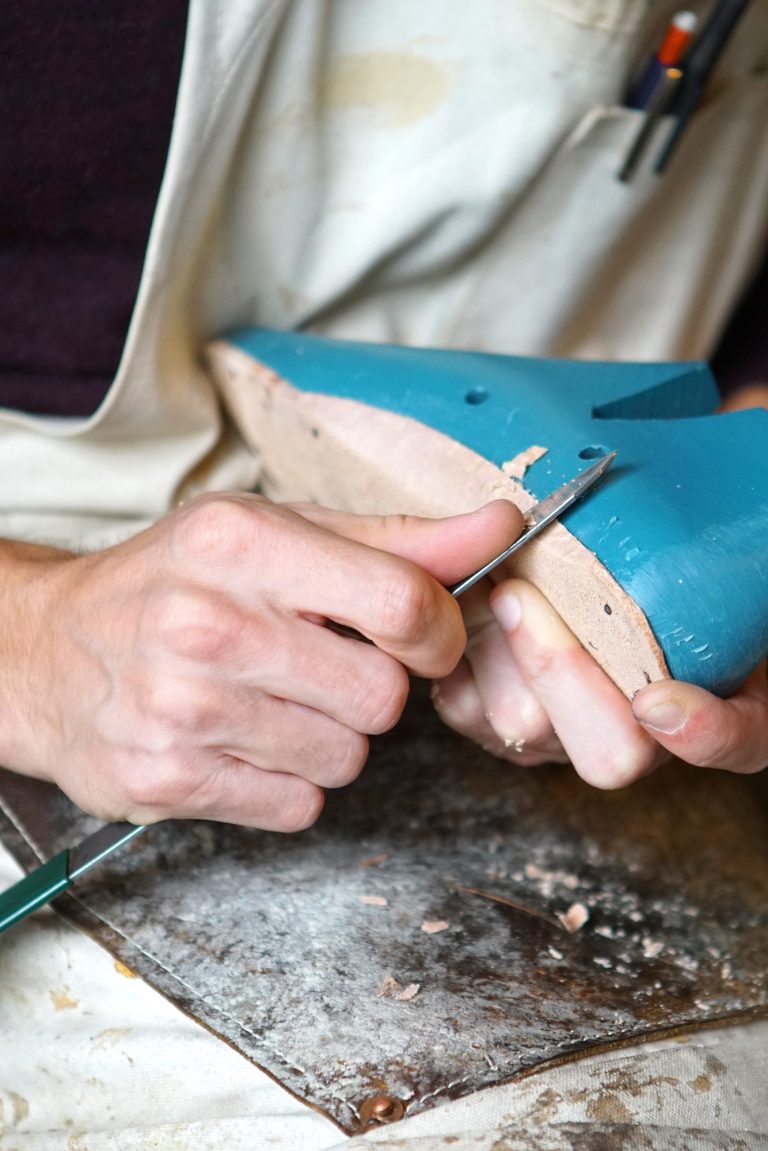
The stone goes in, comes out for the final polish, and goes back. It is slower. It is the only way the metal around a stone finishes properly.
A diamond makes no light of its own. Everything you are paying for is a journey in and back out again, and there is one angle at which that journey fails.
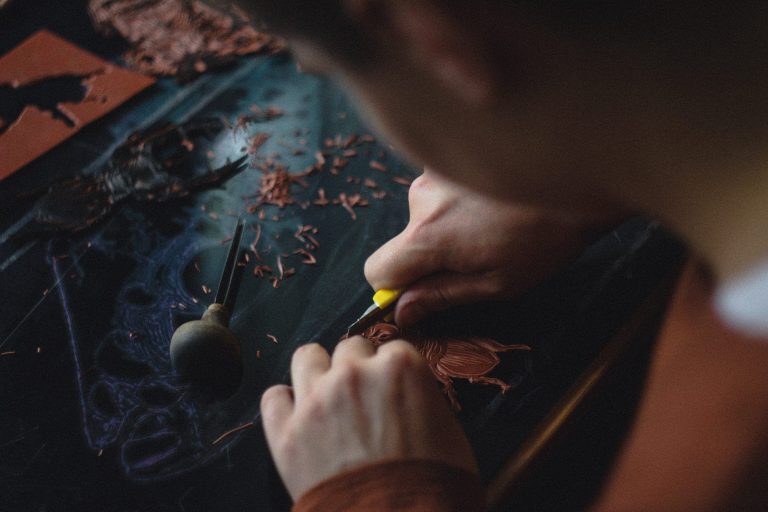
A hallmark is one of the oldest forms of consumer protection in Europe. It is also narrower than almost everybody assumes.
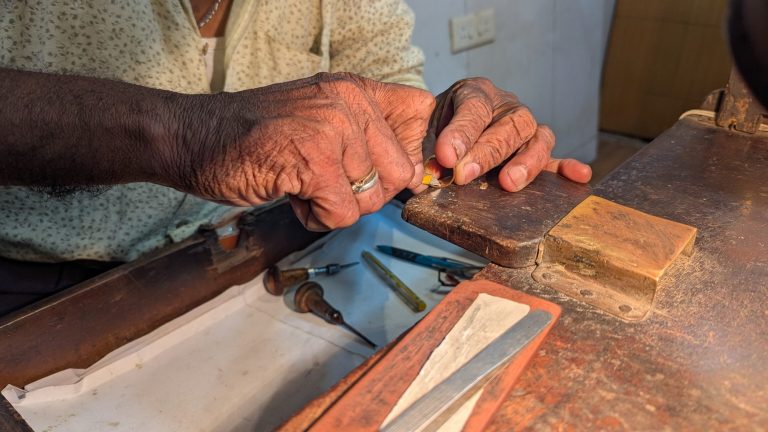
A design made around a stone that does not exist yet is a drawing. Here is what happens in the weeks before one.
A screen flatters everything, which is why this one is calibrated. Hold a bank card against the rectangle on this page to see every piece at its true dimensions — then write to us and see them properly.