- PublishedJune 8, 2026
- Reading4 minutes
- Filed underThe bench
Most commissions arrive as a picture. Somebody has seen a ring, or an image of a ring, and would like that. The first thing we do is put the picture down and talk about a stone, because the order in which those two decisions are made determines almost everything about the result.
Why the order matters
A setting is dimensioned to a stone. Not to a carat weight — to a physical stone, with a measured girdle diameter, a measured depth, a girdle that is thick in some places and thin in others, and often a very slight ovality that the certificate rounds away. Design first and you are committed to proportions before you know what has to fit in them, and the stone that eventually turns up is either shoehorned into a seat cut for a different one or the drawing is quietly redrawn and the client is shown something they did not choose.
So: stone, then drawing, then wax, then metal.
Choosing
We buy rough where we can and cut it ourselves, which means for a substantial commission the process starts before there is a polished stone at all. Where we are buying polished, the selection happens in the atelier, under north light, against a white card, with the stone face down first.
Face down is not perversity. Body colour is read through the pavilion, away from the distraction of the returned light through the table; a stone that looks colourless face up will show its tint immediately face down against white. This is what a laboratory does too, and it is why a client comparing two stones face up in a bright shop is being shown the least informative view of both.
Then the inclusions. A grading report gives a clarity grade and a plot, but the grade compresses a great deal. Two stones both graded VS2 can be entirely different propositions: one with a small crystal under the crown where it is masked by the returned light, one with a feather reaching the girdle at a point where a claw will have to sit. The second is a problem for the setter and a risk for the life of the stone, and it costs the same as the first.
We look at fluorescence in daylight rather than in the dealer’s UV torch, because the question is not whether the stone fluoresces but whether it does anything visible in the light the client will live in. Usually it does not. Occasionally, in a strongly fluorescent stone of high colour, it produces a faint haze in direct sun, and the client should be the one to decide whether they mind.
Talking about money honestly
Weight is the most expensive variable and the least visible one. Between a 0.90 carat and a 1.00 carat round brilliant there is 0.22mm of diameter — about the thickness of two sheets of paper — and a price step of a fifth or more, because the market prices in round numbers. We say this at the first meeting, every time. Roughly a third of clients move down a bracket and put the difference into colour or into the setting; a third do not, for reasons that are entirely their own; and the rest change the shape of the whole commission.
Then the drawing
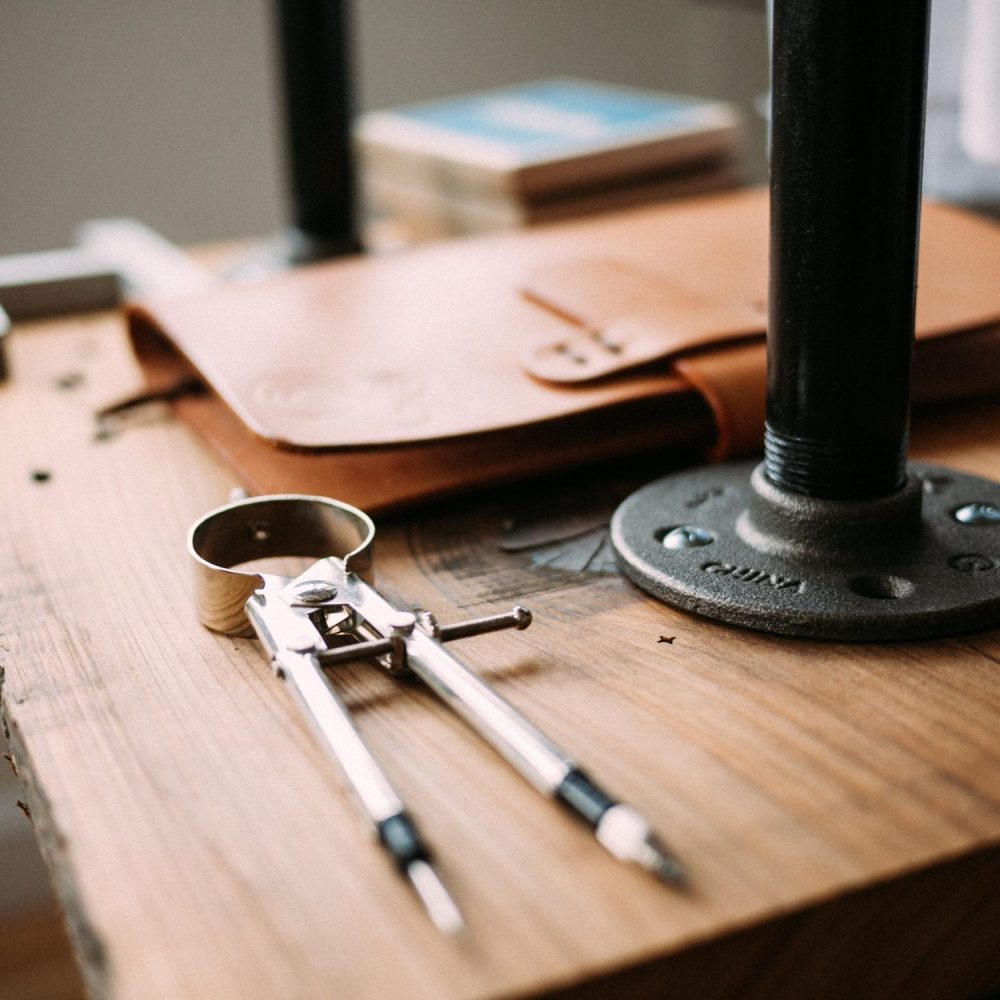
Once the stone is in the safe and measured, the drawing is made at one to one and checked against the stone with a gauge. Not scaled, not enlarged for the client’s benefit, not rendered. Full size, on paper, next to the stone.
Almost every commission changes at this point. A head that looked balanced at three times size looks heavy at life size; a shank that looked delicate turns out to be too fine to carry the weight above it. That hour with a pencil and a gauge is the cheapest hour in the whole process, and it is the one that stops a fourteen week commission from being wrong.